

The reason they leave six-figure rigs looking indulgent comes down to one practical truth.
High End shows are usually about systems you’ll only ever hear in someone else’s room. Vienna 2026 still had six-figure monuments, but the most interesting launches tackled everyday problems: small rooms, streaming-first habits, lingering CD collections, and a general lack of appetite for racks of gear.
This list keeps the focus on products that feel like real candidates for actual systems rather than fantasy builds.
1. Ruark R710
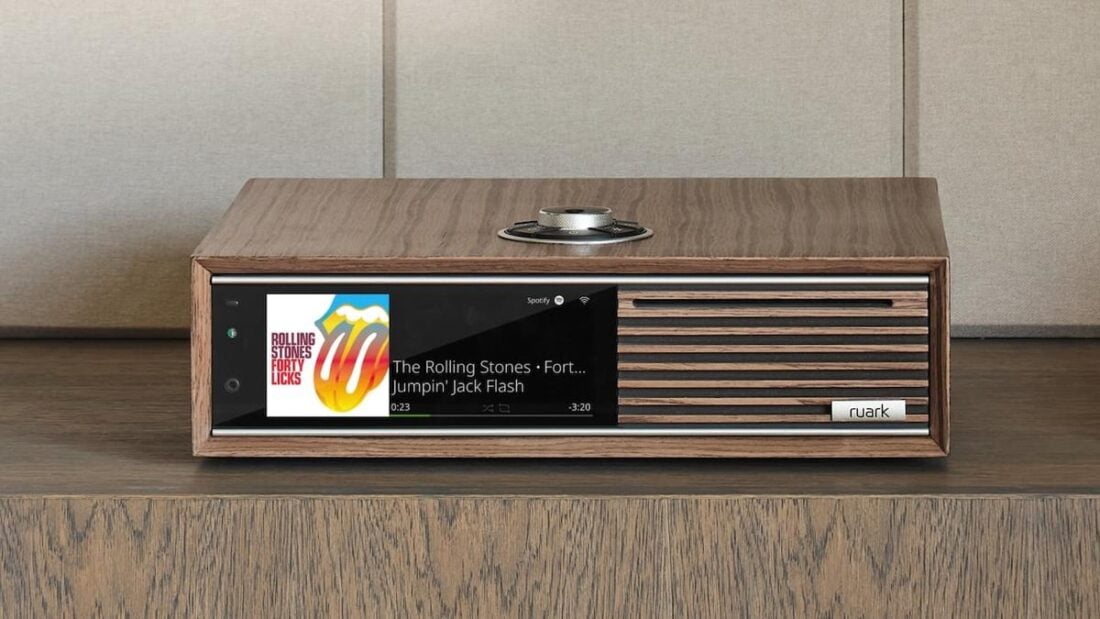
The Ruark R710 is basically a 2026 take on the classic stereo receiver: one box that spins CDs, streams hi-res audio, powers speakers, and looks like furniture rather than kit.
It sits above the five-star R610 with a larger cabinet, bigger display, the same streaming platform, and a hidden slot-loading CD player behind the wooden slats. Inside, you get 2 × 200 W of Class D power, enough to drive serious speakers without needing an external amp.
Listeners who still own discs are the obvious audience, but the R710 is not just a nostalgia play.
Its appeal is how neatly it handles the messy middle ground many people actually live in: CDs on the shelf, streaming as the daily habit, and no real desire to build a rack full of separates. Just add speakers and you have a complete two-channel system with very little visual or cable clutter.
2. Ruark Talisman‑R
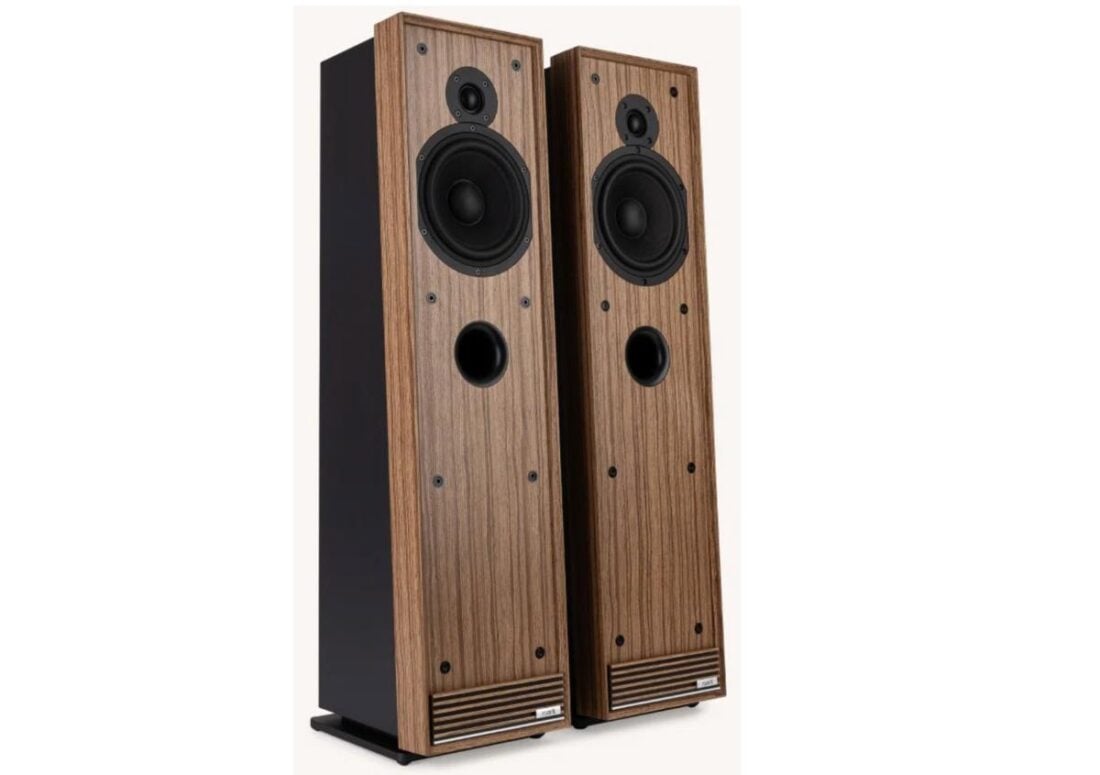
Talisman-R revives a classic Ruark name as a compact two-way floorstander roughly 33.5 inches tall, with a sloped baffle and finishes in fused walnut or satin charcoal. It is rated at 87 dB sensitivity with a 6-ohm nominal load, dipping to 3.8 ohms, and is designed for amplifiers rated from 50 to 250 W.
But one big part of its appeal is balance. The Talisman-R looks approachable, has realistic amplifier demands, and does not ask buyers to choose between a serious speaker and a room-friendly one.
Its slim cabinet also makes it easier to place than a large tower, while the floorstanding format gives it more scale and presence than many standmount alternatives.
3. Cambridge Audio Evo 300
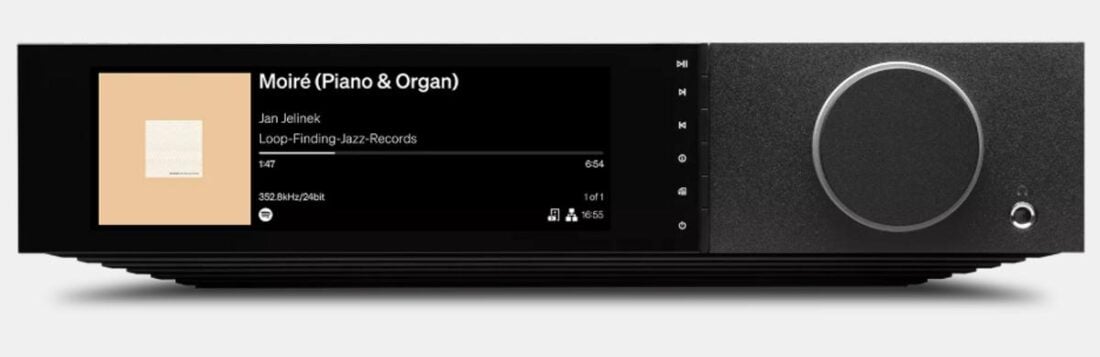
Evo 300 is Cambridge Audio’s most ambitious streaming amplifier yet, with 300 W per channel from Hypex NCOREx Class D modules.
An ESS Sabre ES9038Q2M DAC handles 32-bit/768 kHz PCM and DSD512, while StreamMagic Gen 4 provides network streaming and multiroom. HDMI eARC, Bluetooth, and an MM phono input also round out a spec sheet that makes a separate streamer, DAC, preamp, and power amp feel optional.
On the show floor, it delivered an open, expansive sound with solid bass.
The stronger argument, however, is consolidation. Streaming, DAC duties, TV audio, vinyl playback, preamp control, and serious speaker power all live in one chassis.
4. DALI Vega
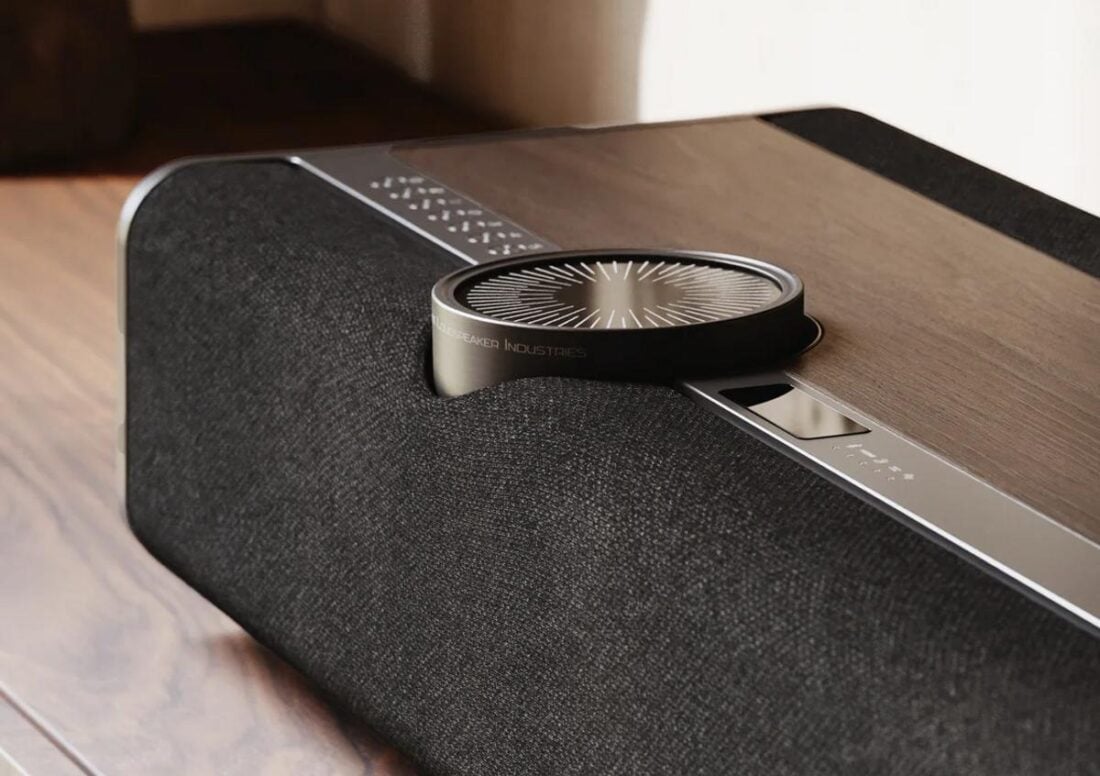
DALI’s Vega is for people who do not want their main music system pushed into a corner just because the TV owns the wall.
It looks close enough to a soundbar to sit under a screen, but DALI is presenting it as a wireless music system first.
A rotating OLED screen lets it work in landscape or portrait, either wall-mounted or placed on a tabletop. But inside, eight channels of digital amplification deliver a combined 400 W, with BluOS streaming, HDMI ARC, AirPlay 2, TIDAL Connect, and Spotify Connect all built in.
Adaptive DSP reads how Vega has been installed and adjusts the sound around that placement. So instead of asking buyers to arrange the room around two speakers, it meets the room where the system is most likely to live.
It basically makes the TV wall useful for music without turning the whole product into a movie-first soundbar.
5. iFi iDSD GR2
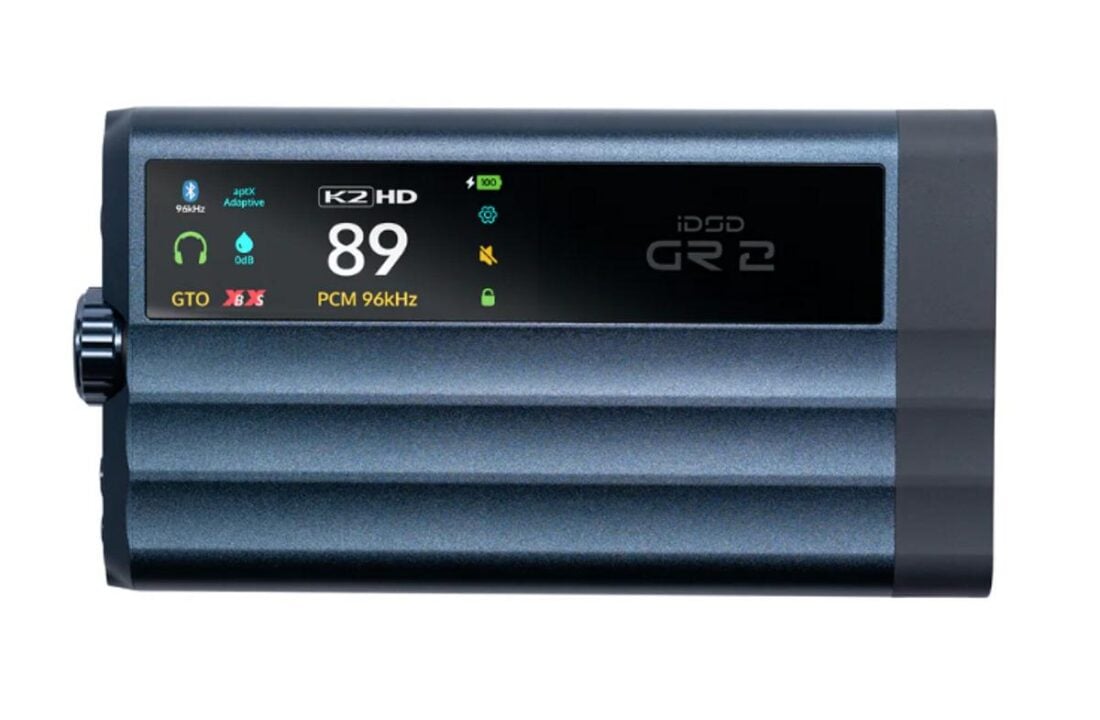
Portable DAC/amps often split into two camps. Some are tiny enough to disappear in a pocket but run out of authority with bigger headphones. Others have the power, then start feeling like desk gear.
The iDSD GR2 tries to sit in the middle.
It is iFi’s first product built around the Burr-Brown PCM1795 DAC chipset, with USB-C and S/PDIF inputs, 3.5 mm and 4.4 mm outputs, plus Bluetooth 5.4 with LDAC and aptX Lossless.
Power output also reaches up to 1,513 mW into 32 ohms, which puts many full-size headphones within reach.
Meanwhile, the color OLED screen helps it feel more like a proper device than a cable accessory, while XBass+, XSpace, and K2HD harmonic restoration give listeners more ways to tune the presentation.
Someone could use it on a commute, plug it into a laptop at work, then keep using it on the sofa at night. But its value comes from that flexibility, not from pretending one portable box can replace every part of a serious headphone setup.
6. AudioQuest DragonFly Copper
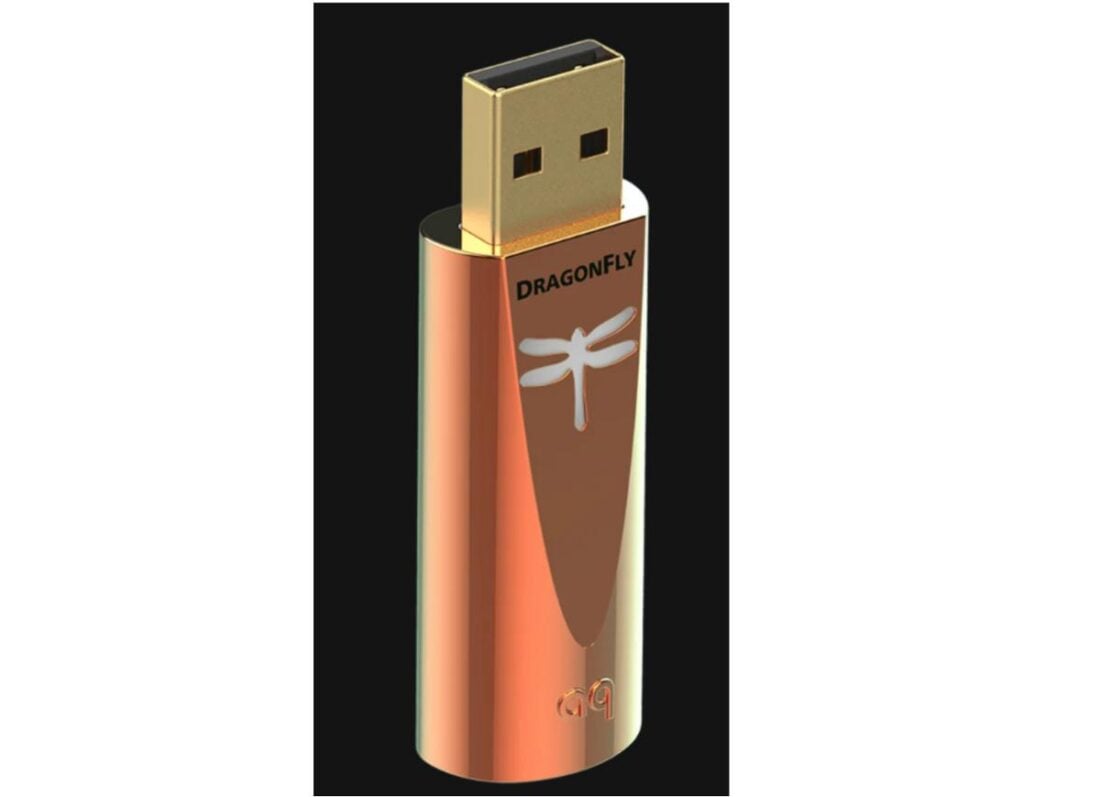
The DragonFly Copper has a tricky job. It has to move the DragonFly line forward without losing the dead-simple appeal that made the earlier Black, Red, and Cobalt models easy to recommend.
AudioQuest keeps the familiar USB-A plug and 3.5 mm output, so the basic ritual stays the same. Plug it in, connect headphones or powered speakers, and bypass the weaker audio stage in a phone, tablet, or laptop.
A new 32-bit ESS Sabre DAC/headphone amp, reworked internal design, higher claimed output, and lower current draw give Copper more substance than its shiny shell suggests.
The point is not to make a desktop stack obsolete, but to make the smallest possible upgrade still feel worthwhile.
7. Eversolo DMP‑A8 Gen 2
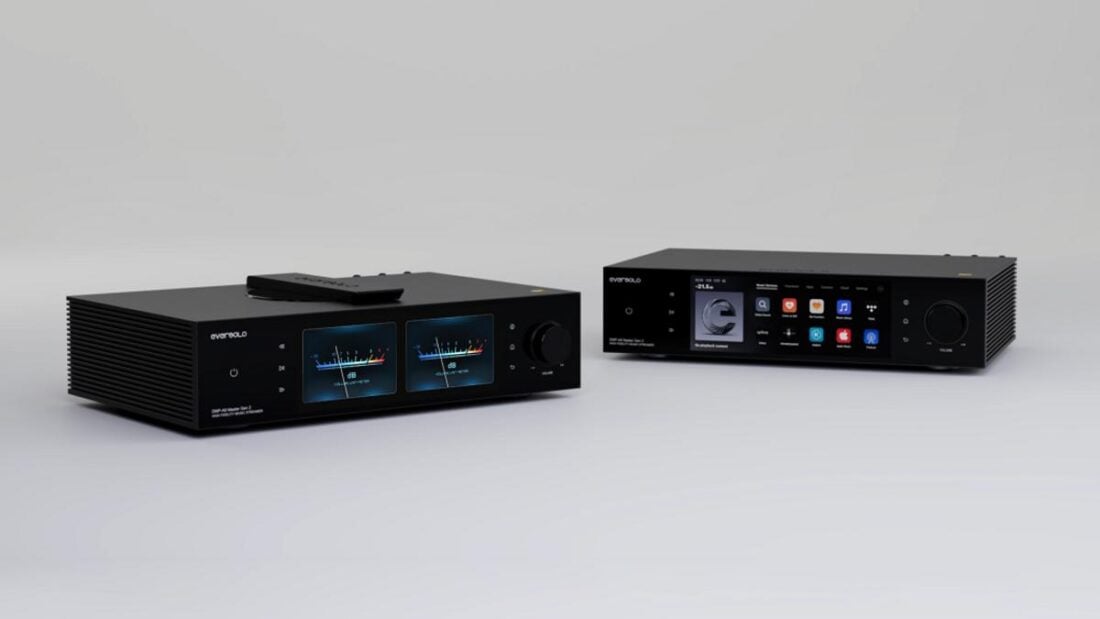
A modern two-channel system can get messy before it ever reaches the amplifier. Streamer, DAC, preamp, TV input, storage, subwoofer control, and app control often end up spread across several boxes. Eversolo’s DMP-A8 Gen 2 tries to clean up that middle layer.
It handles network streaming, local playback from internal SSDs, DAC duties, preamp control, HDMI ARC for TV audio, subwoofer management, and balanced analog outputs.
The Gen 2 revision keeps Eversolo’s AKM AK4191EQ + AK4499EXEQ DAC architecture, while adding Wi-Fi 6 and SFP fiber networking for setups built around lower-noise links.
Still, most of the value for this is in how much awkward system plumbing it removes. You can still pair it with serious power amplification and speakers, but the source side becomes far less fragmented.
8. Questyle QMS Streaming System
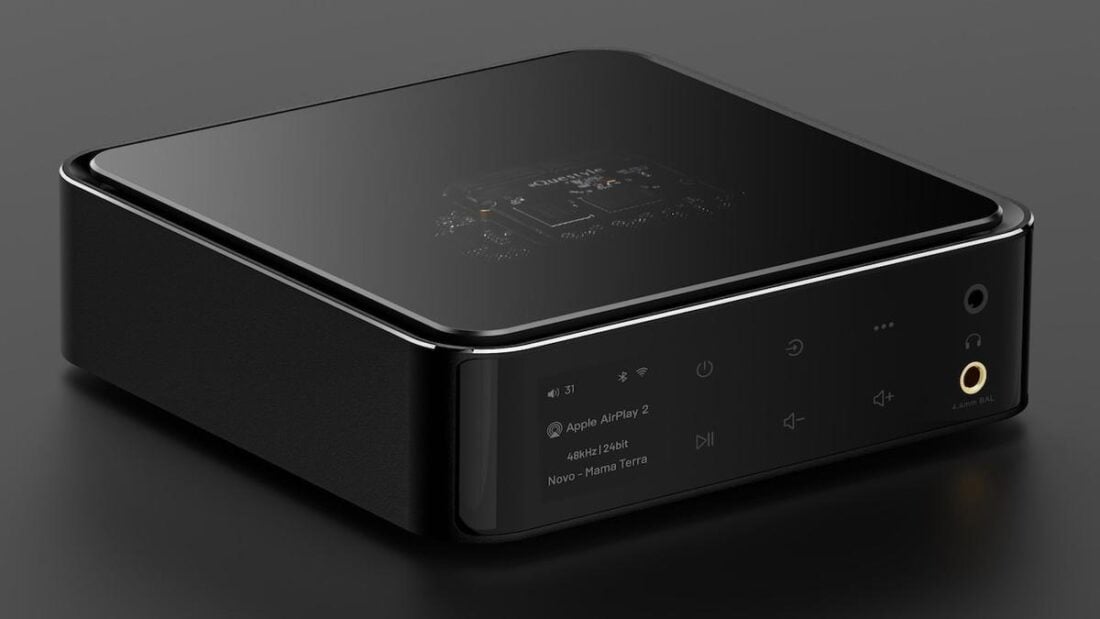
Questyle is approaching wireless hi-fi from the opposite direction of most lifestyle systems. The QMS Streaming System starts with the assumption that the speaker side still matters, then builds the wireless ecosystem around that.
The iXStreamer hub handles sources and streaming, while the E4 and E5 active bookshelf speakers take care of conversion and amplification.
Questyle is also leaning on SEAS driver development and its own current-mode amplification, which makes the speakers feel like the center of the idea rather than accessories attached to an app.
Wi-Fi 6 and low-latency wireless links replace long analog runs, while HDMI ARC/eARC lets the system work with a TV without turning it into a conventional soundbar setup.
A system like this lives or dies by execution, but the concept is easy to understand. Put the source hub where the sources are, put the amplification inside the speakers, and remove the cable mess between them.
9. Klipsch Rebellion
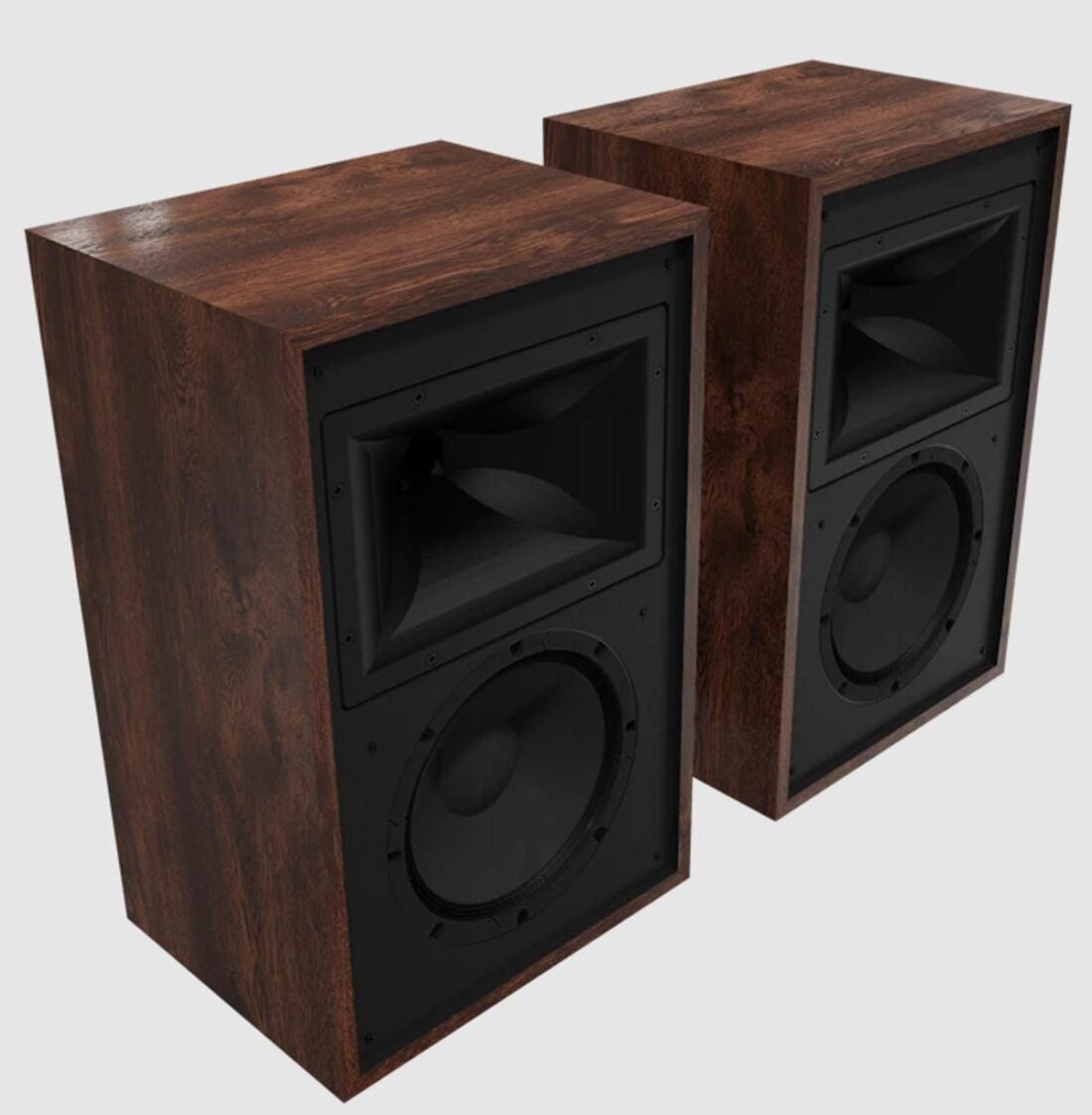
Rebellion gives Klipsch Heritage fans something they have not really had before, a compact standmount that still looks and behaves like part of the old bloodline.
Its inspiration comes from the rare 1958 H8, but the hardware is modern. The two-way design uses a highly efficient K-702 tweeter mounted to a K-703 Tractrix horn with Klipsch’s patented Mumps geometry, partnered with a new K-81-EP woofer and a rear Tractrix flare port.
The cabinet keeps the retro visual language, while the smaller footprint makes the formula easier to place than the larger Heritage models.
You still get the promise of horn-loaded immediacy, high sensitivity, and the brand’s forward energy, just in a size that does not ask the room to surrender.
Rebellion matters because it makes Heritage feel less like an all-or-nothing commitment. It is still a character speaker, but now that character comes in a form more people can realistically fit at home.