
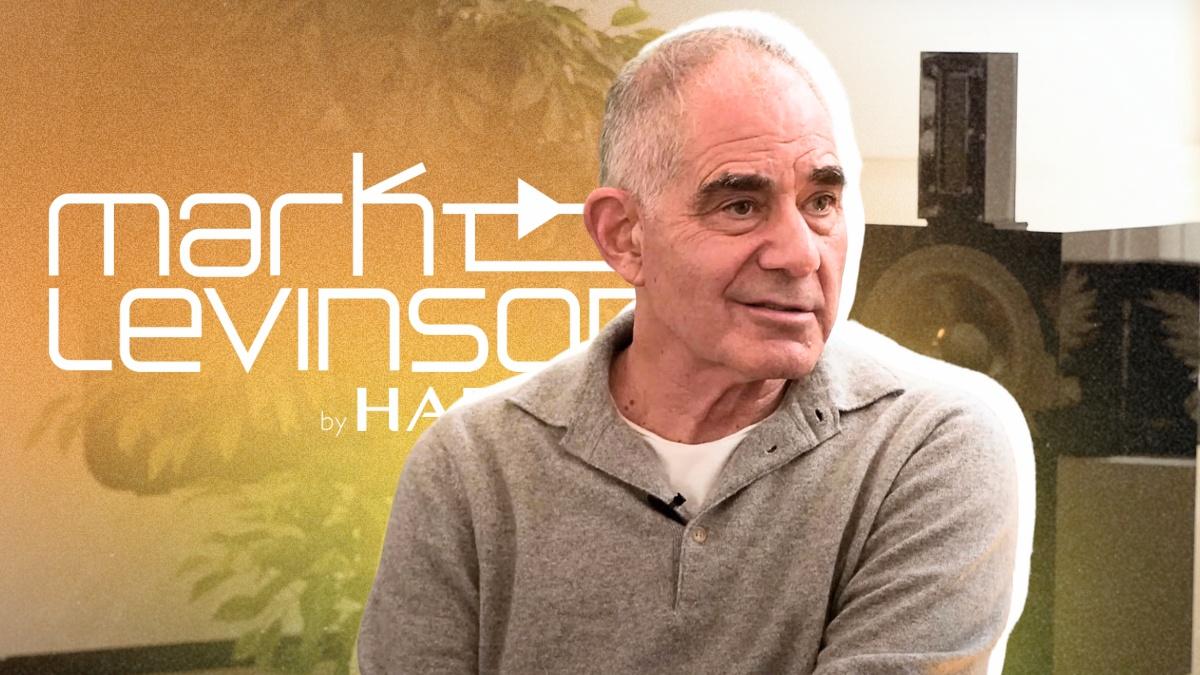
An insider’s take on how the industry exploits audiophiles.
Mark Levinson, known for pioneering high-end audio technologies since the early 1970s, recently shared his critique of the luxury audio market. In a video interview with Audiophile Junkie, Levinson shared his frustration with what he sees as “mafia” tactics in the industry.
According to him, these tactics focus on making money at the expense of sound quality and real innovation.
Mark Levinson’s Critique of the High-End Audio Market

Mark Levinson’s discontent with the current state of the high-end audio market comes from the big difference between the past and present.
Thinking back to the early days of his career, Levinson reflects on a time when the industry was driven by a love for music and the pleasure of experiencing high-quality audio recordings.
He argues that this relationship with music has been overshadowed by a market that takes advantage of consumer passion.
One of Levinson’s main criticisms is about the industry’s focus on profit over product integrity. He points out that industry magazines tend to feature products from advertisers, not necessarily those with the best value or performance.
He also claims that advertisers get the recommendations despite the fact that many top recordings are produced on Macs.
Aside from this, Levinson also criticizes the stagnation in technological advancement within the industry. According to him, companies often rely on old technologies. Yet, they repackage these with high price tags and market them as “new innovations”.
Another big issue that Levinson brings up is the cyclical nature of the high-end audio business model, which he says is made to sell the same thing over and over. This model, he argues, goes against the goal of making lasting, quality products.
In the end, Levinson draws an unflattering analogy.
He compares the mainstream high-end audio market to “supermarket pasta,” where all companies utilize essentially the same technology and parts, rather than offering truly handcrafted, unique products.
Levinson’s Philosophy and Approach to Audio Equipment

Despite his harsh criticism, Levinson is said to be committed to creating audio equipment that people will not just use but love and cherish for a lifetime, much like a well-crafted piano or violin.
He claims that his approach is artisanal and focuses on handcrafted quality over mass production. It also prioritizes the individual experience rather than broad market appeal.
As he said, this philosophy is very different from the mainstream industry practices of pushing constant upgrades and replacements.
Levinson’s decision to keep a small-scale operation supports this philosophy. It keeps the quality of his products high, while avoiding the mass-market strategies that are common in the high-end audio industry. This approach makes sure that each product is made with the highest attention to detail and performance.
He also emphasizes the importance of scientific principles in designing audio equipment, particularly the frequency response, which he sees as crucial for high-quality sound. Based on his observations, this is in contrast to the brands’ tendency to sometimes overlook technical specs in favor of subjective sound interpretations.
While these personal impressions are important, Levinson argues that there should be a balance between the two and that precise engineering shouldn’t be overlooked.
“A lot of people depend on the subjective. ‘I hear this; you hear that. I think this; you think that’ kind of thing. Dick (Burwen) thought that audio is 50% engineering and 50% art. But if you don’t have the engineering, you’re lost,” Levinson explained.
“I think one of the things today is people don’t really understand the importance of engineering and…just get lost in the subjective only. Of course, the subjective is what we want. We value the listening experience, what we like, what sounds best to us. That’s all personal and subjective, but the objective is also very important.”
Consumer Reactions
The public and consumer reactions to Mark Levinson’s critique of the high-end audio market reveal a complex mix of agreement, skepticism, and debate.
Some users noted a contradiction between Levinson’s criticism of industry greed and the high prices of his own products.
However, Audiophile Junkie came to Levinson’s defense. He said that he is critiquing the industry’s focus on high profit margins, and likens it to selling “knockoff Rolexes,” rather than providing real innovation and value.
Mark Levinson’s products have always for me been un-attainable as I have never had the disposable income to enjoy such products, I do however enjoy music and have always tried to own what I consider to be good quality audio and have endeavoured to match each component in the system (musically) to one another, which always is a wonderful challenge. I do think many of the classic companies are very guilty of this as I have never found products from “the big three” have never lived up to their high pricing from a musical perspective.
Any company or craftsman dedicated to making the very best products possible, is likely to be at price points beyond what many can afford to pay. That’s true of musical instruments as well. The question is whether the value is there. No one objects to the high cost of a fine violin or piano if it’s a great one. But how many audio products pass the test of time and give lasting pleasure for many decades? I am grateful that so many of my product designs (please don’t refer to Harman ML) continue to be loved and valued by music lovers 40 years after they were made. But I’m especially excited about my new Daniel Hertz products made with really new disruptive technology that enable price points within reach of many more people, with sound and performance beyond the most expensive on the market today. Compare our DH Maria 350 amplifier, the best I know how to make, for around $14k (replaces the dac, preamp, power amp and interconnect cables) with $150k racks. DH proves that the best might not be cheap but is not necessarily the most expensive.
Regarding quality audio products that last, I hit the jackpot with my purchase of a Nakamichi 410 pre-amp, Quad power amp (both purchased in December 1977), Thorens TD166 mk2 TT (1985) and ADS 1230 speakers (September 1983). All work and sound to my ears as good as they did when new. The Nak and Quad have been refurbished and I had the x-overs replaced in my speakers. I’ve heard many great systems from the 1970s to the present, but none have wowed me enough to spend the thousands it would cost to get “better” sound. So there you have it.
Siri, what does irony mean?
The Chad Nelson Pass gives his circuits away to diy enthusiasts. The victim Mark Levinson does an an irony.
Hospital complain charity..
I think his comment about buying a piano is apt. I splurged a big tax refund in 1980 on a pair of DCM TIme Windows. At the time they were about $1200 a pair (nearly $5K equivalent today). However, I still have them, 44 years later, and they still sound great! Buy good stuff, take care of it, and it will last a LONG time. In defense of the industry though, there IS some good equipment out there, and some real innovation. But, cable lifters and $1K USB or Ethernet cables are not it..
I’ve had my ADS 1230 speakers since 1983. You’re right – quality lasts.
I purchased a pair of Richard Allen Pavanes. They are now 50 years old! They still sound better than speakers priced at 500 to 1,000 euro! I do not have to position them in the middle of a room to get the best performance!! This observation by levinson is correct. We are losing engineering innovation and trading that for a bottom line number.
I don’t see the point here. We should all know that the “music” is not what it used to be. The station of the world we live in now has been driven into a passion sterile society. We as the elder, some of us see this. Yes Taylor Swift can fill an arena and more but ask yourself why? It’s all politically driven. The stars for the youth are created for them, presented in away to project inclusion if you agree. Must must agree of be outcast by your peers. Look at American Idol. A brilliant idea of creating stars the they would profit from. Those who won and went on for me did not deserve the fame and success. Just for going on a stupid show for a number of times and then crowned a star? How many passion filled singers and musicians worked their craft for years and never got a chance cause they didn’t know the right people. The music in the 70’s was formed by bands! Not producers. If you were good, had great sound, you made it. You just had to work hard for a long time. Thats passion in music. Music has been bastardised. BTW I run vintage McIntosh, the best in my book.
I certainly agree that “music is not what it used to be” and that shows like American Idol have been part of the “dumbing down” of America.
While I was too young to have knowledge of the industry in the 70’s, I did have roommate in the 90’s that was a backup singer/session singer for the likes of India Arie, Nile Rodgers & Meshell Ndegeocello to name a few. She often held “jam sessions” in our living room with her friends who were also session musicians and aspiring artists.
I was constantly blown away by the level of talent. Most of them managed to make a living doing what they loved, but with one exception none ever had any major commercial hits even though a few did end up with record contracts.
To this day I still say the music industry is the LEAST merit based business in the world (TV and Film is a distant second). It’s more about timing/luck than anything else. Who you know also helps a lot (Nile Rodgers was the reason many of these artists made a living) but still doesn’t guarantee any level of success. I do my best to support local artists by going to their shows, etc.
With regards to equipment … I will say some new equipment is amazingly capable and inexpensive. I have a 5 figure system in my living room (mostly Cary / Joseph Audio) and a Lyngdorf / Joseph Audio system in my home bedroom (I tend to do a lot 2 channel critical listening in my bedroom).
I had a 30 year old Hafler amp, and some GoldenEar bookshelfs that were collecting dust. I put those in our vacation rental and added a Wiim Ultra as source. All of this could be had for just over $1k and it is amazingly close to my home systems.
What a hypocrite! He is just butt hurt no one buys his gear anymore.
My equipmentwhich sounds to mestill goodvenough to not buy any new components is baically 50 years old: receiver Tandberg, turntable Pioneer, Dynaudio speakers. The only younger components are Cd player Marantz and DAC. Currently sold equipment at the same sound quality would cost me maybe 10000+€. While all above memtioned cost me in total about 1K only.
This is called Neoliberalism and Financialization! Fictitious valorization that has propaganda and snake oil as its main pillar! Capitalism, Brother!
The name Red Rose ring a bell? Selling rebadged Chinese stuff for 10-20 times the cost.
What a fraud.
Too bad Levinson’s products are not in sync with his lofty words. I have a Lexus with a Mark Levinson branded audio system. The stereo was part of the trim package of the car. The sound of this system does not come anywhere near the premium price it commanded. I detect some hypocrisy in Mark Levinson’s musings.
I don’t think Mark has anything to do with Mark Levinson product anymore. Some other company bought the name. But not for nothing, expecting high end audio in a car is like chasing unicorns.
Thats Harmon Kardon, he sold out years ago, and now Samsung owns Harmon
Harman Kardon acquired the Mark Levinson brand name and this is most likely what you have in your car. Don’t confuse the brand with the man.
The Mark Levinson audio brand does not belong to Mark Levinson since a long time. He has been kicked out of his company by investors who wanted to focus on profits. This is what you have in your Lexus.
Levinson specifically said not to judge him by the Harmon ML brand products. He sold the brand to Harmon decades ago and has nothing to do with those products.
If you want innovative products at affordable prices, look to China eg custard, topping, smdl, etc.
If you want independent reviews, outside of the pockets of advertiser’s go to places like the iiwi YouTube channel.
See no further than Sabaj a30a.
I couldn’t agree more with Mark. Older equipment was better built and more musical. I have 1992 Apogee Diva speakers and older, Mark Levinson/ Madrigal equipment. Newest piece is 2001. It is built so well and sounds so musical. Amplifiers weighs 150 pounds each. Preamp weighs 104 pounds. Levinson equipment costs a lot but well worth it. All electronic components are of highest quality. Great design. You get what you pay for. Could not be more satisfied with older Levinson equipment. In my opinion nothing built like it today.
Some years ago I spent a day with a friend who was making a record at one of londons biggest
Recording studios
The room was nothing like expected, it was ceramic tiled from floor to ceiling and could be acoustically altered
By several layers of curtaining that when drawn would overlap each other.
Of course the sound recorded was recorded
Through clever electronics
But the sound you heard
Just as in your own home
Was governed by your hearing and the room
Acoustics.
Thus do a
pair of speakers costing
£ 50 000 sound £45 500
Better than a £ 500 pair?
In the wrong room
From stylus to speaker and all the equipment
Linking them
Regardless of cost could
Sound rubbish.
Any thing can be built and sold at any price
And there will always be
Gullible people to whom
It can be sold. And those people are the hi fi industries natural prey.
Is that why he sold his company to Harmon Kardon and now it’s mainly in cars?
Audiophiles forget that the studio equipment used to record their musical pearls is a $1500/2000 microphone, $4 per meter cables, ordinary power supplies connected to the mains by $3/m cables, that the microphone cables are laid directly on the floor during recordings, whether it’s the Beatles, Karajan, Bach, Callas or Taylor Swift, the consoles and peripherals are indeed high-end but in no way mounted on expensive decoupling cones, the digital recorders are simple Mac Pros on the market connected to DAC cards and Pro audio components with no connection to the world of Audiophile HiFi, the studio speakers are often FAR from what we find in private audiophiles, I see completely fanciful cables dealing with problems that do not exist, in the studios we are in balanced XLR connection the DACs are integrated into the consoles, the digital outputs on standard RJ45 networks are connected to Commercial computer servers,
personally, my speakers are based on Onken and Audax Pro from the 80s, made by me, the amps are used Crown Sonorisation amplifiers, my DAC is a 196Kb Steinberg/Yamaha, and I’m having fun, that’s the main thing.
In the UK companies like Living Voice, Kuzma etc are still making wonderful products whose sole purpose is to reproduce the music you love in the most accurate and tactile manner. This will never be cheap but not outside a lot of people’s budgets. Levinson’s equipment never fitted into this philosophy.
I just went to the The High End Audio Show in Costa Mesa (Socal) a few weeks ago. I was a bit worried about going as I thought I may hear systems which showed what I was not getting and then I would be back in the upgrade cycle. I was pleasantly surprised that only 1 system (10-15X cost to current system) had something very special and in all other cases I was more than happy with my current system (Naim with Amphion 7LS) and in most cases given the choice I would gladly keep mine (these other systems were 3-5X cost to current system). I came to the conclusion that cost increases are not bringing more but MFG costs and wages are increasing hence the higher price. Great article.
Mark Levison audio company is now owned by Samsung, who owns Harmon Industries and about 25 other companies. Their all badges on the same stuff.
This is kind of useless commentary unless he specifically points out which high end brands he is referring to. So ‘generally speaking’ ALL high end brands (except for Mark Levinson of course) are price gougers? To get the Mark Levinson upgraded sound system in a Lexus is thousands of dollars. Not exactly peanuts