

The eleven tracks connect in a way Fleetwood Mac kept quiet for decades.
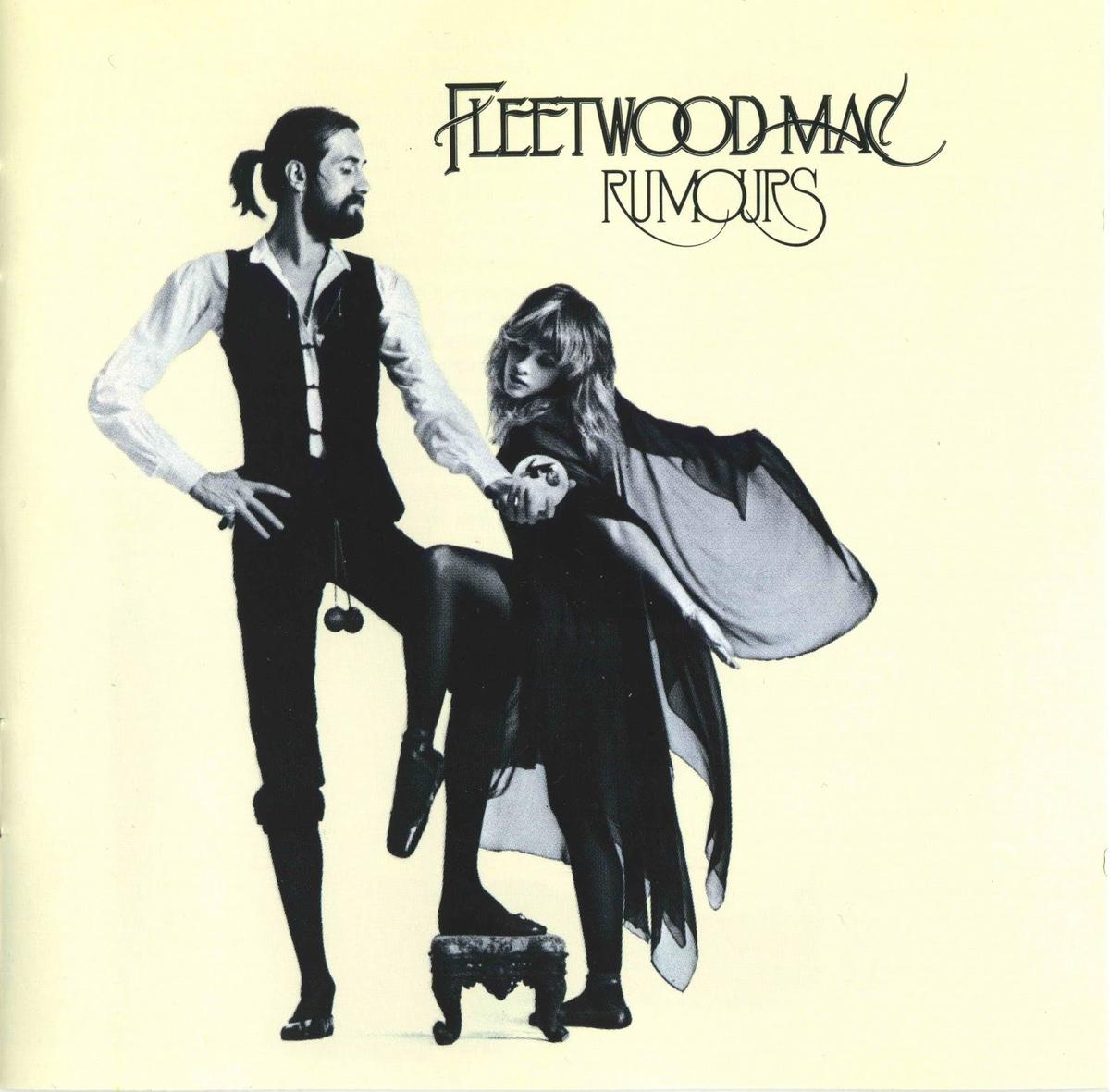
Most people hear Rumours as the greatest breakup album ever made. Except Lindsey Buckingham never called those eleven songs ‘breakup songs’. He called them “dialogues.”
Each track on Rumours is one half of a real conversation, directed at a specific person who was standing in the same studio, playing on the same record. And once you start hearing those connections, the album plays very differently.
Here’s how those exchanges run through the record.
How Three Breakups Ended Up on the Same Record
When Fleetwood Mac arrived at Record Plant in Sausalito in early 1976 to follow the self-titled album that turned them into one of the biggest bands in America.
Inside the band, however, three relationships had already fractured
- Lindsey Buckingham and Stevie Nicks had broken up after roughly four to five years together.
- Christine and John McVie were divorcing after eight years of marriage.
- Mick Fleetwood, meanwhile, entered the sessions carrying the fallout of his own collapsing marriage.
So, they basically began writing songs that answered one another across the room.
Buckingham and Nicks had joined the band as a package deal just two years earlier, with Buckingham refusing to sign on without her. But now the relationship was over, and neither of them could leave.
On the other hand, the McVies handled their own breakup more quietly. Christine even recalled that they were “as cold as ice to each other because John found it easier that way.”
This left Fleetwood, often cast as the band’s emotional center, trying to hold the group together while dealing with his own private upheaval. He spent the next year navigating his own crisis while keeping everyone else pointed at the same microphones.
And nobody admitted what the songs were really saying.
Buckingham described the sessions as “this elaborate exercise of denial, keeping our personal feelings in one corner of the room while trying to be professional in the other.”
Christine McVie put it more simply. “Drama. Dra-ma.”
The Buckingham-Nicks Argument That Runs Through Rumours
Nicks gave the album’s central argument its most memorable nickname.
On Rumours, that split between philosophical distance and open anger runs through the Buckingham-Nicks songs. Five of the album’s eleven tracks belong to that exchange, and two of them form its clearest pair.
“Dreams”

Nicks wrote “Dreams” in about ten minutes, alone in a studio that belonged to Sly Stone.
Sitting on the bed with a Fender Rhodes and a cassette recorder, and the song came quickly, nearly complete, built around rain-and-thunder imagery and a tone of resignation rather than attack.
Christine McVie heard the demo and found it boring, as it’s “ust three chords and one note in the left hand.”
But Buckingham disagreed. His production split those same chords into three distinct-feeling sections, which helped give the finished song its shape. And despite how angry he was with Nicks at the time, his first response to the demo suggested that he immediately recognized what she had.
Eventually, “Dreams” became Fleetwood Mac’s only #1 single.
“Go Your Own Way”
Buckingham’s answer to “Dreams” was harsher, as “Go Your Own Way” turned the same split into a public accusation.
This aggression was built into the arrangement as much as the lyric. Buckingham modeled the drum pattern on the Rolling Stones’ “Street Fighting Man,” and Mick Fleetwood delivered a rhythm so unusual that session drummer Jeff Porcaro studied it. The instruments sound as embattled as the lyric.
The line “packing up, shacking up” was its sharpest blow, as it implied that Nicks was sleeping around. In fact, Nicks asked Buckingham to remove it before the album came out, but he refused.
Then came the part that made the dialogue inescapable. Nicks had to sing backing vocals on a song attacking her character.
Buckingham’s other contributions kept the argument going at different volumes. “Second Hand News” opened the album with the bravado of a man performing emotional recovery before the real pain starts.
Meanwhile, “Never Going Back Again” sounds gentler on the surface, but Buckingham has still said it “was obviously about Stevie.” Even when he softened the tone or changed the pose, the conversation kept circling back to the same person.
“Gold Dust Woman”
Nicks’s final major statement on Rumours was not aimed squarely at Buckingham. She described “Gold Dust Woman” as her “symbolic look at somebody going through a bad relationship, doing a lot of drugs, and trying to make it.” (“Gold dust” was cocaine.)
Over the years, Nicks has given several overlapping explanations of the song. It is about cocaine, about groupies, and about the larger rock-and-roll life threatening to consume the people inside it.
All those explanations point in the same direction: a song less about one argument than about what the entire period was doing to her.
The recording matched that intensity, too. Fleetwood broke sheets of glass wearing goggles and coveralls while Nicks san. And, the final take came at 4 a.m., with Nicks wrapping her head in a black scarf to draw herself deeper into the song’s atmosphere.
“Silver Springs”
But the sharpest Nicks-Buckingham dialogue never made it onto the album.
Nicks wrote “Silver Springs” as her clearest response to Buckingham. She took the title from a town in Maryland and used the phrase to mean “what you could have been to me.”
Producer Ken Caillat, who engineered the sessions, called the song “gorgeous,” “powerful,” and “a masterpiece.” But that did not save it.
The track was simply too long for the vinyl running order, and Fleetwood and Buckingham told Nicks in a Sausalito parking lot that it would be cut.
For years, “Silver Springs” lingered as the great missing piece of the Rumours dialogue. Then Fleetwood included it on the 25 Years box set in 1991 without telling Nicks.
It was released anyway, and she left.
Six years later, Nicks returned for The Dance. In 1997 she performed “Silver Springs” with the full band for the first time, singing the final verse directly at Buckingham.
Christine McVie’s Songs Said More Than Anyone Realized
While Buckingham and Nicks fought in the open, Christine McVie worked more quietly. She wrote songs with clear personal targets, then disguised them well enough that the men playing on them often did not realize they were the subject.
“Don’t Stop”

“Don’t Stop” sounds like a broad pop anthem about optimism that yesterday is over, and tomorrow might improve. And for years, John McVie seems to have heard it that way.
Christine’s own explanation was careful enough to preserve the disguise.
“Directed more toward John” is one of the great understatements in rock history. It wasn’t general encouragement. It was a wife telling her husband their marriage was finished, wrapped in a melody so warm that he never recognized himself in it.
This went on unnoticed until McVie figured it out in a 2015 Mojo interview, roughly thirty-nine years after the recording sessions.
For nearly four decades, he had been performing what was essentially his own farewell song without knowing it.
“You Make Loving Fun”
Christine wrote “You Make Loving Fun” about Curry Grant, the band’s lighting director and her new lover, while she and John were still divorcing. But she told John the song was about her dog.
The song hardly sounds furtive, though. It’s actually one of Rumours’ warmest recordings, driven by a groove that sounds nothing like a woman celebrating an affair behind her husband’s back.
“Oh Daddy”
Christine’s gift for misdirection extended beyond John. She wrote “Oh Daddy” about Mick Fleetwood, the band’s self-appointed peacemaker who was trying to hold everyone together while his own life was also coming apart.
The song’s sensual tone led some listeners to assume it was about Curry Grant, but it wasn’t.
And like John with “Don’t Stop,” Fleetwood didn’t realize the song was about him until after the sessions ended.
The Songs That Broke the Pattern
Not every track on Rumours works as a private message disguised as a song. A small number step outside that structure altogether.
“Songbird”
Christine McVie described “Songbird” as “a little prayer” that came to her all at once in the middle of the night. Recorded alone at UC Berkeley’s Zellerbach Auditorium, it does not read like one side of an argument or a coded message to someone else in the band.
On an album built from romantic fallout, accusations, evasions, and reply songs, “Songbird” feels different. It is not trying to answer anyone. It is the rare moment on Rumours in which a voice speaks without an obvious target on the other end.
“The Chain”
“The Chain” is the only song on Rumours credited to all five members, so the song was assembled from multiple fragments:
- Christine McVie contributed a discarded piece called “Keep Me There.”
- Buckingham and Nicks drew on parts of “Lola (My Love),” a 1973 song from before they joined Fleetwood Mac.
- Nicks added new verses.
- Fleetwood and John McVie built the bass-heavy coda that became the track’s signature passage.
- The final arrangement was assembled by splicing the pieces together with razor blades.
That irony made ‘The Chain’ the album’s clearest statement of collective survival. On an album where every other song belongs to one person arguing at another, the only collaborative credit goes to the track about refusing to break apart.
The Gen Z Perspective
“Dreams” has passed two billion plays, while “The Chain” and “Go Your Own Way” have each crossed one billion, as a generation that never saw Buckingham and Nicks on a stage together now streams Rumours more than any other album of the 20th century on Spotify.
The album surged again in September 2020, when Nathan Apodaca posted a skateboarding video set to “Dreams.” Within a week, the song’s streaming numbers jumped 125 percent and it returned to the Billboard Hot 100 for the first time in three decades.
Many younger listeners do not hear Rumours simply as a breakup album, though.
The dialogue framework helps explain that reaction. Once the songs are heard as exchanges inside the band rather than generic breakup songs, the album starts to feel less like a record of aftermath and more like people answering one another in real time.
Rumours is also the best-selling album in U.S. history with the majority of its songs written and sung by women. So, many of the new listeners see this album as a form of woman empowerment.
This would have been a fun article to read for me. Unfortunately, the pop-up ads all over the screen prevented me from that. So the headphonesty site goes into the blocked category on my phone 😕