

You’ve probably put something filthier than a toilet seat on your ears today.
Most people think of their headphones as harmless everyday gear, but they can actually carry a shocking amount of bacteria. In fact, a UK study found that headphones have about ten times more microbial growth than a toilet seat.
However, while most people use headphones every day, very few clean them.
Here’s what the research uncovered and why it matters.
Study Reveals Alarming Bacterial Levels
Boots Hearingcare swabbed different types of headphones and found bacterial growth across the board.
Here’s what they discovered:
- On-ear models: about 205 colonies
- Over-ears: around 165 colonies
- Wireless in-ears: about 80 colonies
- Wired in-ears: roughly 48 colonies
- Toilet seat (comparison): about 21 colonies
That makes the on-ear results about ten times higher than their toilet-seat sample.
“It’s genuinely surprising to see that different headphone models are all showing bacterial levels higher than a toilet seat,” said Hannah Samuels, audiologist at Boots Hearingcare.
“Most people would never guess that something they wear daily could carry that kind of microbial load.”
However, it’s worth noting that Boots doesn’t share key details like the units of measurement, how many devices were tested, or their lab methods. So, these numbers should be read as indicative rather than precise.
Healthcare guidelines don’t use a single universal “safe” threshold, either. Some hospital monitoring sets a limit as low as 2.5–5 CFU per cm², while one ICU study flagged anything over 100 CFU per swabbed area as a risk.
Still, we can’t deny that most of the Boots’ counts sit in a range that health professionals would consider concerning.
Other studies back up the idea that contamination is common.
Researchers at Manipal University reported heavy bacterial growth in 96% of frequent users, sometimes hitting levels above 100,000 CFU/ml. And, a 2024 CloudZero experiment found on-ear headphones averaging 1,073 colonies, compared with 425 on toilet seats in their own tests, which is about 2.5 times more.
Methods vary across studies, but the trend is consistent: headphones often harbor far more bacteria than people expect.
Health Risks of Contaminated Headphones

Finding bacteria on headphones doesn’t always mean infection, but it does mean exposure.
When you block the ear canal with earbuds or headphones, you create a warm, moist space that helps germs multiply. Worse, if skin inside the canal is irritated or broken, those microbes can move from harmless colonizers to real problems.
The most common bacteria linked to ear infections are Staphylococcus aureus and Pseudomonas aeruginosa. Both are well-known causes of swimmer’s ear, and Pseudomonas in particular can be stubborn because it often resists multiple antibiotics.
Meanwhile, less harmful bacteria like Staphylococcus epidermidis or coryneforms also often show up. These normally live on the skin but can cause trouble if conditions change.
However, not everyone faces the same risk. People with skin conditions like eczema, diabetes, weaker immune systems, or recent ear injuries are more prone to infection. But, even healthy users can run into trouble if they wear headphones for long stretches in hot or sweaty conditions.
Expert Cleaning Guidelines
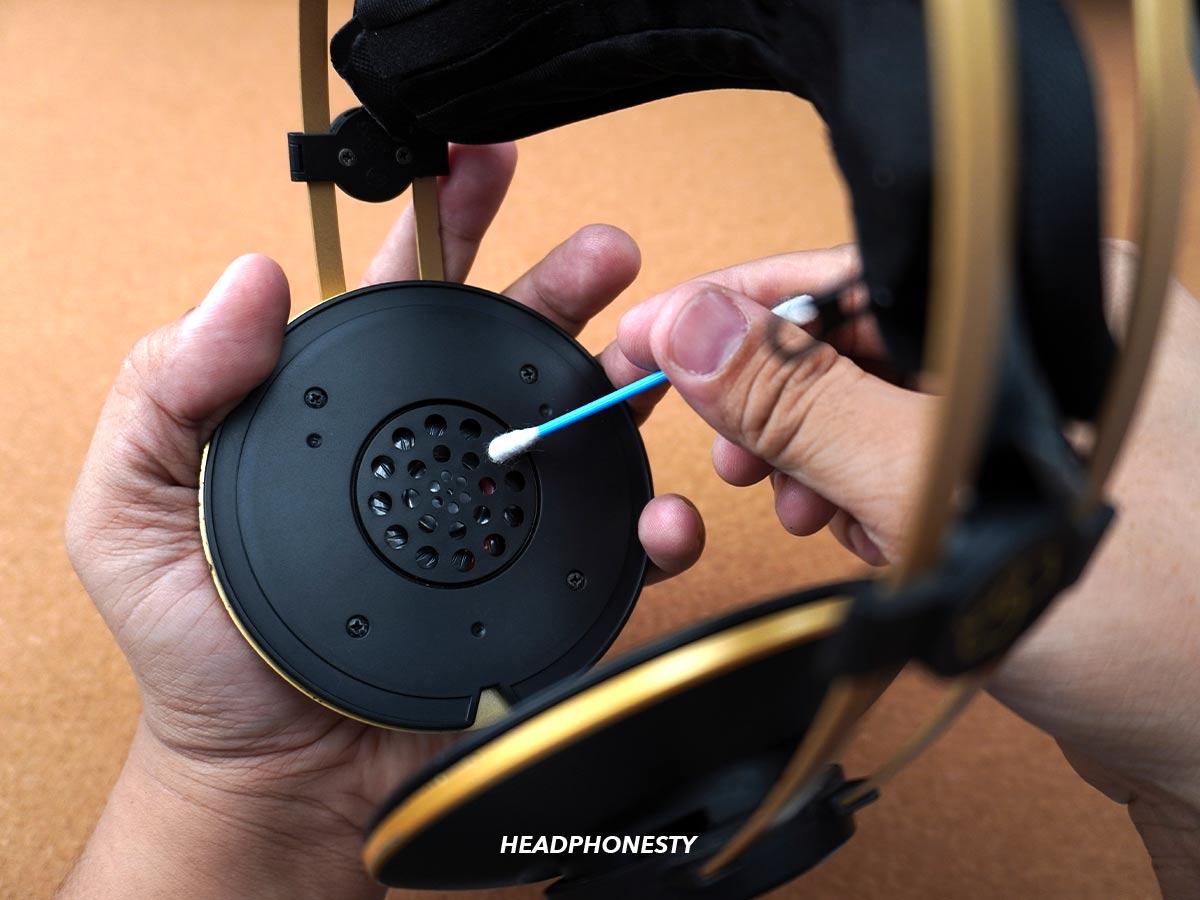
Keeping headphones clean isn’t complicated, but it does take a little routine.
Here’s a quick checklist of how to do so:
- How often: Clean your gear regularly. For most people, that means at least once a week, but wipe them more often if you work out, travel, or use them in hot or sweaty conditions.
- Basic method: Use a soft, slightly damp cloth with plain water. Avoid getting moisture into any openings. Always let everything dry fully before using again.
- For ear tips:
- Silicone tips: Remove and rinse with water only. No soap or alcohol. Dry completely before reattaching.
- Foam tips: Don’t use liquids at all, as they break down the material. Instead, replace them every few months or sooner if they look worn or smell.
- For ear pads and headbands: Dampen a cloth with mild dish soap diluted in water. Wipe gently and let them air-dry completely.
- For exterior surfaces: Many manufacturers allow a wipe with 70% isopropyl alcohol on hard plastic or metal parts, but not on foam or silicone. Always double-check your model’s care page.
- For speaker grilles or meshes: Use a dry soft brush to loosen debris. Some brands suggest a light use of micellar water on mesh surfaces, but only where specified.
- Maintenance: Replace ear pads or tips when they crack, peel, or won’t come clean.
- Storage: Make sure headphones are completely dry before sealing them in a case. Moisture trapped inside will speed up bacterial growth.
To keep bacteria at bay, Samuels advises cleaning your headphones at least once a week.
A simple wipe-down with a damp microfiber cloth and mild soap—or an antibacterial wipe—does the job. Just make sure to let them dry completely before using them again.
This routine becomes even more important if you use headphones while working out, traveling, or during any sweaty activity. These conditions expose the devices to extra moisture and bacteria, which speeds up contamination and requires more frequent cleaning.
Another key factor in headphone hygiene is avoiding shared use.
Sharing earbuds is a common way bacteria gets passed between people, making it best to keep your devices to yourself. Additionally, the silicone or foam tips on many in-ear models trap grime over time, so replacing them regularly (every few months) helps maintain cleanliness.
Special care is needed during ear infections. If you’re dealing with one, in-ear headphones should be completely off-limits, as wearing them can delay healing or trigger reinfection.
Watch for warning signs too. Symptoms like itchy ears, strange discharge, or muffled hearing could signal that your headphones are contributing to ear problems, making it worth checking with an audiologist.