

The list runs from 1975 sessions to brand new pressings across every genre.
Direct-to-disc albums put more pressure on the room, the musicians, and the engineers than most studio recordings. The performance has to work while the lacquer is being cut, so timing, tone, balance, and dynamics all matter at once.
That’s why the best examples are more than collector pieces. They can show how drums hit, how piano notes decay, how brass opens up, and how closely musicians respond to each other.
This list focuses on records where the format serves the music, not just the spec sheet. And it’s not excluded to very old records, either!
- 1. Thelma Houston - I've Got the Music in Me (Sheffield Lab, 1975)
- 2. Dave Grusin - Discovered Again! (Sheffield Lab, 1976)
- 3. Harry James & His Big Band - The King James Version (Sheffield Lab, 1976)
- 4. Carlos Montoya - Flamenco Direct Vol. 1 (Crystal Clear, 1980)
- 5. James Newton Howard & Friends - James Newton Howard & Friends (Sheffield Lab, 1983)
- 6. Lincoln Mayorga & Distinguished Colleagues - The Missing Linc (Volume II) (Sheffield Lab, 1972)
- 7. Jim Keltner / Ron Tutt - The Sheffield Drum Record (Sheffield Lab, 1981)
- 8. Tsuyoshi Yamamoto Trio - Misty for Direct Cutting (Somethin' Cool, 2021)
- 9. Heiichiro Ohyama - Vivaldi Tricentennial (Sonic Arts / Direkt To Disk Records, 1978)
- 10. Bill Berry & His Ellington All-Stars - For Duke (M&K RealTime, 1978)
- 11. Joe Sample, Ray Brown, Shelly Manne - The Three (East Wind, 1976)
- 12. LA4 - Just Friends (Concord Jazz, 1978)
- 13. Rough Trade - Rough Trade Live! (Umbrella, 1976)
- 14. Lee Ritenour & His Gentle Thoughts - Gentle Thoughts (JVC, 1977)
- 15. Interpreti Veneziani - Vivaldi in London (Chasing the Dragon, 2024)
- 16. National Symphony Orchestra - España: A Tribute to Spain (Chasing the Dragon, 2016)
- 17. Syd Lawrence Orchestra - Big Band Spectacular! (Chasing the Dragon, 2015)
- 18. John Lenehan - Beethoven Piano Sonatas: Pathetique and Moonlight (Chasing the Dragon, 2019)
- 19. Joscho Stephan Trio - Paris-Berlin (Berliner Meister Schallplatten, 2018)
- 20. Billie Eilish - Live at Third Man Records (Third Man Records, 2019)
- 1. Thelma Houston - I've Got the Music in Me (Sheffield Lab, 1975)
- 2. Dave Grusin - Discovered Again! (Sheffield Lab, 1976)
- 3. Harry James & His Big Band - The King James Version (Sheffield Lab, 1976)
- 4. Carlos Montoya - Flamenco Direct Vol. 1 (Crystal Clear, 1980)
- 5. James Newton Howard & Friends - James Newton Howard & Friends (Sheffield Lab, 1983)
- 6. Lincoln Mayorga & Distinguished Colleagues - The Missing Linc (Volume II) (Sheffield Lab, 1972)
- 7. Jim Keltner / Ron Tutt - The Sheffield Drum Record (Sheffield Lab, 1981)
- 8. Tsuyoshi Yamamoto Trio - Misty for Direct Cutting (Somethin' Cool, 2021)
- 9. Heiichiro Ohyama - Vivaldi Tricentennial (Sonic Arts / Direkt To Disk Records, 1978)
- 10. Bill Berry & His Ellington All-Stars - For Duke (M&K RealTime, 1978)
- 11. Joe Sample, Ray Brown, Shelly Manne - The Three (East Wind, 1976)
- 12. LA4 - Just Friends (Concord Jazz, 1978)
- 13. Rough Trade - Rough Trade Live! (Umbrella, 1976)
- 14. Lee Ritenour & His Gentle Thoughts - Gentle Thoughts (JVC, 1977)
- 15. Interpreti Veneziani - Vivaldi in London (Chasing the Dragon, 2024)
- 16. National Symphony Orchestra - España: A Tribute to Spain (Chasing the Dragon, 2016)
- 17. Syd Lawrence Orchestra - Big Band Spectacular! (Chasing the Dragon, 2015)
- 18. John Lenehan - Beethoven Piano Sonatas: Pathetique and Moonlight (Chasing the Dragon, 2019)
- 19. Joscho Stephan Trio - Paris-Berlin (Berliner Meister Schallplatten, 2018)
- 20. Billie Eilish - Live at Third Man Records (Third Man Records, 2019)
1. Thelma Houston – I’ve Got the Music in Me (Sheffield Lab, 1975)

Recorded live in Hollywood, the session went straight from microphone to lacquer with Doug Sax mastering and Bill Schnee engineering.
Pressure Cooker gives Houston a hard-driving band to push against, and the record’s appeal starts there. The brass comes in fast and clean, the rhythm section keeps its snap, and Houston’s voice rises above the arrangement without being pinned flat by heavy studio polish.
Instead of turning the performance into a glossy soul showcase, the recording keeps the band’s physical force intact. You can hear how the horns, drums, and vocal feed off each other in real time, especially when the arrangement shifts from tight groove to full-band release.
2. Dave Grusin – Discovered Again! (Sheffield Lab, 1976)

Vibraphones are one of the toughest instruments for a recording chain to reproduce accurately.
Every mallet strike begins with a fast, metallic transient before blooming into shimmering overtones. Analog tape tends to soften that initial attack. Here, each note lands with remarkable precision. The ringing decay lingers naturally, free from the veil of tape hiss.
Ron Carter’s double bass is equally impressive. Every pluck has weight, texture, and clear pitch definition. It is easy to follow each line through the performance.
3. Harry James & His Big Band – The King James Version (Sheffield Lab, 1976)

Big band recordings demand speed, power, and plenty of headroom.
A full horn section can easily push a recording to its limits. On tape, those explosive peaks often sound a little softer than they did in the room. This direct-to-disc recording keeps the band’s sudden bursts sharp without turning them harsh.
Recorded in an L.A. chapel chosen for its natural acoustics, the album captures Harry James’ trumpet with striking focus. Softer passages still have shape and breath, while the full-band hits arrive with the scale and pressure a big band needs.
The essential moment is not just volume. It is how quickly the band can move from a controlled phrase to a wall of brass without losing its outline.
4. Carlos Montoya – Flamenco Direct Vol. 1 (Crystal Clear, 1980)

Flamenco demands speed from both the musician and the recording. The rapid rasgueado strums and sharp golpe taps create lightning-fast transients that can lose some of their bite on conventional records.
On this, every strike arrives clearly.
Montoya’s footwork lands with force, but the guitar remains the center of the performance. The strings snap, the body of the instrument resonates, and the smallest changes in attack make the rhythm feel tense and alive without needing a large ensemble.
That directness matters because flamenco can turn muddy when the percussive details blur together. Here, the hand movement, foot taps, and guitar resonance stay separate enough for the performance to feel both fast and controlled.
5. James Newton Howard & Friends – James Newton Howard & Friends (Sheffield Lab, 1983)

This is the album many audiophiles reach for when they want to put a system through its paces.
James Newton Howard’s synthesizers demand speed and strong imaging. Each attack needs to land cleanly, and the layered parts need enough space to avoid turning into a bright, crowded blur.
Jeff Porcaro’s drumming raises the pressure even more. The kick and snare hit with real weight, while the busier passages test whether a system can keep rhythm, image placement, and low-end control intact at the same time.
This record earns its reputation because it exposes congestion quickly. When the setup is dialed in, the music sounds dense but organized. When something is off, the same tracks can flatten, smear, or lose their punch.
6. Lincoln Mayorga & Distinguished Colleagues – The Missing Linc (Volume II) (Sheffield Lab, 1972)

The acoustic piano is one of the most revealing instruments in recorded sound. This album helped define how audiophiles evaluate it.
Traditional piano recordings often rely on multiple microphones. When blended together, the sound can lose focus. The stereo image flattens, and the instrument no longer feels anchored in space. Play The Missing Linc (Volume II), and the piano stays locked between the speakers.
Mayorga’s playing makes that stability easy to hear. The left-hand weight, right-hand attack, and lingering decay all come from the same physical instrument instead of feeling assembled from separate microphone angles.
That is why this record became such a useful piano reference. It does not just sound clean. It gives listeners a clear sense of where the instrument sits, how large it feels, and how each note changes the space around it.
7. Jim Keltner / Ron Tutt – The Sheffield Drum Record (Sheffield Lab, 1981)

Drums reveal problems in a recording chain faster than almost anything else. This album was built around that idea.
A drumstick’s first strike should feel quick, solid, and physical. When the recording chain softens that attack, the kit can sound controlled instead of explosive. Poor playback gear can cause a similar problem, turning fast hits into dull thuds or splashy cymbal noise.
Sheffield recorded Jim Keltner and Ron Tutt in solo drum performances, which leaves every part of the kit exposed. The kick drum tests weight and speed. Snare hits test transient snap. Cymbals show whether the top end can stay clean without turning brittle.
The value of this disc is how quickly it exposes a system. If the drums lose shape, smear together, or stop sounding physical, the problem becomes hard to ignore.
8. Tsuyoshi Yamamoto Trio – Misty for Direct Cutting (Somethin’ Cool, 2021)

Recorded in February 2021, Misty for Direct Cutting shows that the format is not only a 1970s audiophile relic. The trio plays with a level of control that makes the recording feel modern without losing the pressure of a live session.
Tsuyoshi Yamamoto’s piano work carries most of the drama. Soft passages have room to breathe, then sudden forceful strikes arrive with real weight. The lower register sounds full, while the upper notes keep their bite without becoming glassy.
Bass and drums give the performance its balance. They do not simply sit behind the piano. They frame Yamamoto’s changes in touch, giving the quieter moments tension and the louder passages a stronger sense of release.
9. Heiichiro Ohyama – Vivaldi Tricentennial (Sonic Arts / Direkt To Disk Records, 1978)

This chamber recording captures Vivaldi in a close, tightly focused acoustic.
Recorded as part of an audiophile “Laboratory Series” project, the ensemble does not lean on a huge hall sound for drama. Instead, the appeal comes from the precision of the players and the way the instruments lock together.
String attacks are clean, and the dry presentation brings the bowing forward without making the ensemble feel thin. Fast passages remain easy to follow because the lines do not blur into one glossy mass.
That focus is what makes the record useful. It lets listeners hear Vivaldi as chamber music with bite, timing, and discipline, not just as a pretty wash of strings.
10. Bill Berry & His Ellington All-Stars – For Duke (M&K RealTime, 1978)

Cymbals can reveal the strengths and weaknesses of a recording in seconds.
Their shimmering overtones are difficult to reproduce cleanly. On many recordings, they lose air and start to sound splashy or brittle. On For Duke, the cymbals stay smooth, extended, and easy to place inside the ensemble.
The brass section gives the album its real weight. Each horn has a clear position, and the players can swing hard without collapsing into a single bright blast. That matters on an Ellington tribute, where the arrangements need color as much as punch.
11. Joe Sample, Ray Brown, Shelly Manne – The Three (East Wind, 1976)

Ray Brown’s double bass is one of the highlights of this recording. On many studio albums, the bass sits comfortably in the background. Here, it has real presence. Every pluck carries weight, texture, and a clear sense of pitch.
Recorded at Warner Bros. Studios, the session captures the trio with very little standing between the musicians and the finished record. Shelly Manne’s drums sound lively and direct. Joe Sample’s piano is equally expressive, with crisp attacks and long, natural decays.
The best part is how clearly the three players respond to one another. Brown’s bass lines do more than anchor the music. They push against Manne’s cymbal work and give Sample’s piano phrases something firm to lean on.
12. LA4 – Just Friends (Concord Jazz, 1978)

Recorded in Capitol Studios’ Studio A, Just Friends brings four jazz veterans into a setting where placement, tone, and timing are easy to hear.
Bud Shank’s alto saxophone sounds smooth without losing edge. Laurindo Almeida’s classical guitar has a crisp, woody character. Ray Brown’s bass gives the session weight, while Jeff Hamilton’s drums add speed and lift without crowding the rest of the group.
The stereo image is one of the album’s greatest strengths. Each musician occupies a stable position between the speakers, so the quartet feels like four players sharing one space rather than four parts arranged across a mix.
13. Rough Trade – Rough Trade Live! (Umbrella, 1976)

Rock and direct-to-disc recording rarely crossed paths in the 1970s. Most rock albums were built layer by layer. Overdubs, edits, and tape were all part of the process.
Recording a full band live to lacquer was an ambitious experiment, making this a sought-after direct-to-disc record.
The gamble paid off. The kick drum has real impact. The vocals sound raw and immediate. Every musician feels connected to the same performance instead of separate studio sessions stitched together later.
That shared sense of timing is what gives the album so much of its energy.
14. Lee Ritenour & His Gentle Thoughts – Gentle Thoughts (JVC, 1977)

Fusion leaves very little room for a recording to hide. Fast rhythms, layered keyboards, and intricate guitar lines can easily blur together. This recording keeps every instrument distinct, even during the busiest passages.
Lee Ritenour is joined by an outstanding group of musicians, including Dave Grusin, Patrice Rushen, Harvey Mason, Anthony Jackson, and Ernie Watts. The lineup gives the album plenty of firepower, but the recording never turns that density into clutter.
Ritenour’s guitar has the speed and polish fusion fans expect, while the keyboards and rhythm section stay easy to track around him.
That separation is the reason the album belongs here. It lets the music stay busy without becoming smeared or glossy.
15. Interpreti Veneziani – Vivaldi in London (Chasing the Dragon, 2024)

Released in 2024, this is one of the most recent Chasing the Dragon direct-to-disc classical releases. It also ranks among the label’s most ambitious.
Period instruments demand careful recording. Their delicate textures and subtle dynamics leave little room for error. This performance preserves the bite of the bows, the warmth of the gut strings, and the natural blend of the ensemble.
Recorded live at AIR Studios, the album places the musicians in a spacious acoustic without letting the room blur the playing. The appeal is in the balance: bow texture stays clear, the strings retain body, and the ensemble breathes without losing focus.
16. National Symphony Orchestra – España: A Tribute to Spain (Chasing the Dragon, 2016)

A full orchestra demands enormous dynamic range, and recordings often struggle to capture it convincingly.
The music can move from a single woodwind line to the full orchestra in an instant. Preserving that jump without shrinking the scale or blurring the sections is one of the hardest jobs in recording. This direct-to-disc release handles those shifts with unusual control.
Conducted by Debbie Wiseman and featuring mezzo-soprano Rosie Middleton, the performance gives the orchestra room to expand. Woodwinds, strings, brass, and percussion remain distinct, even when the music builds into larger crescendos.
The payoff is scale with structure. The album sounds big, but it does not turn the orchestra into a single wall of sound.
17. Syd Lawrence Orchestra – Big Band Spectacular! (Chasing the Dragon, 2015)
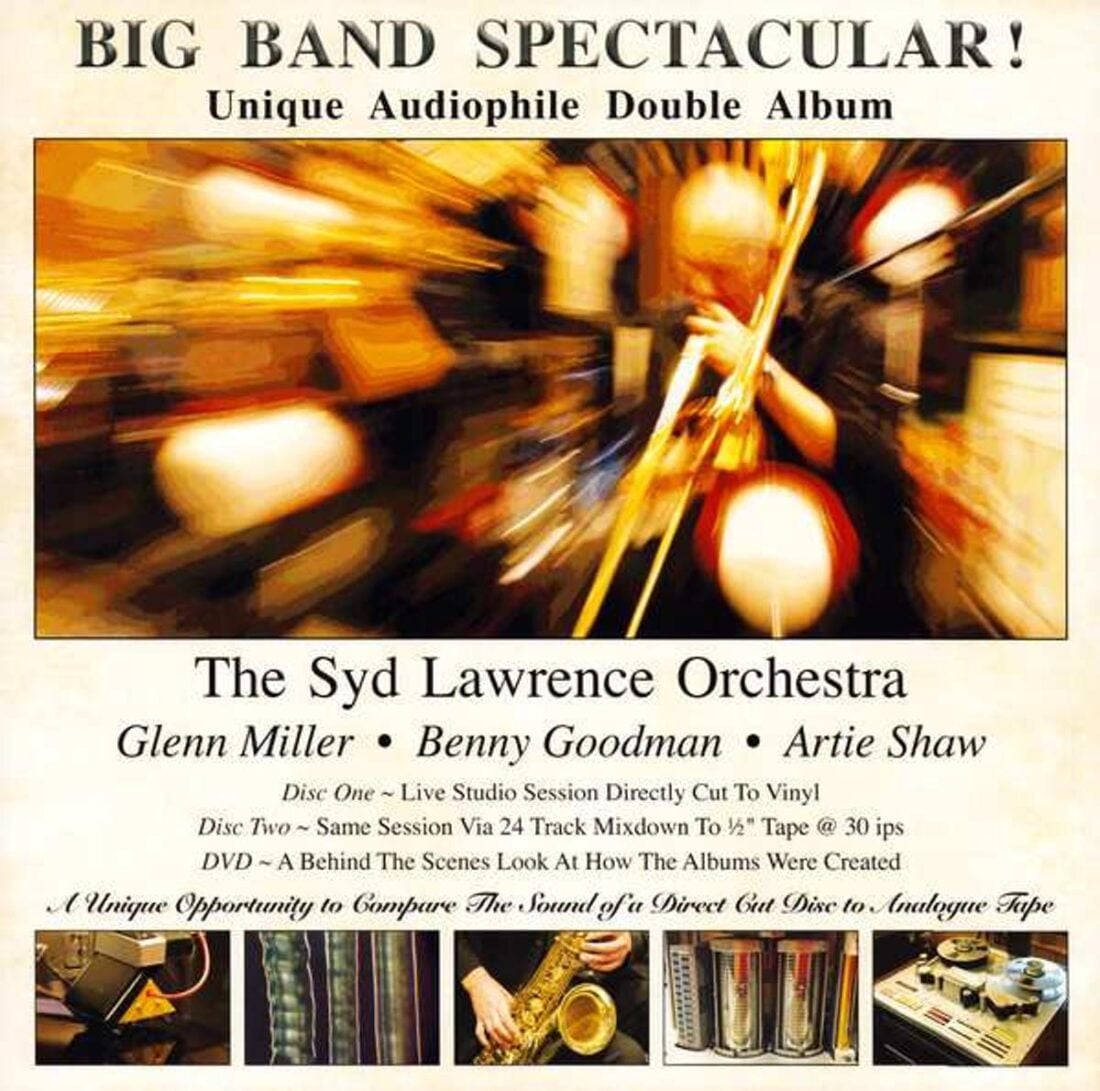
This album offers a rare same-performance comparison between two recording methods.
One version was cut direct-to-disc, while the other was recorded through analog tape. Since the performance itself stays the same, the differences are easier to judge without guessing how much came from the musicians, the room, or the arrangement.
The direct cut gives the brass more snap and the drums more immediate bite. The tape version has a slightly rounder character, which some listeners may prefer on louder passages.
Because the comparison is built into the album, Big Band Spectacular! works as more than a showpiece. It gives listeners a practical way to hear how recording choices change attack, texture, and perceived energy.
18. John Lenehan – Beethoven Piano Sonatas: Pathetique and Moonlight (Chasing the Dragon, 2019)
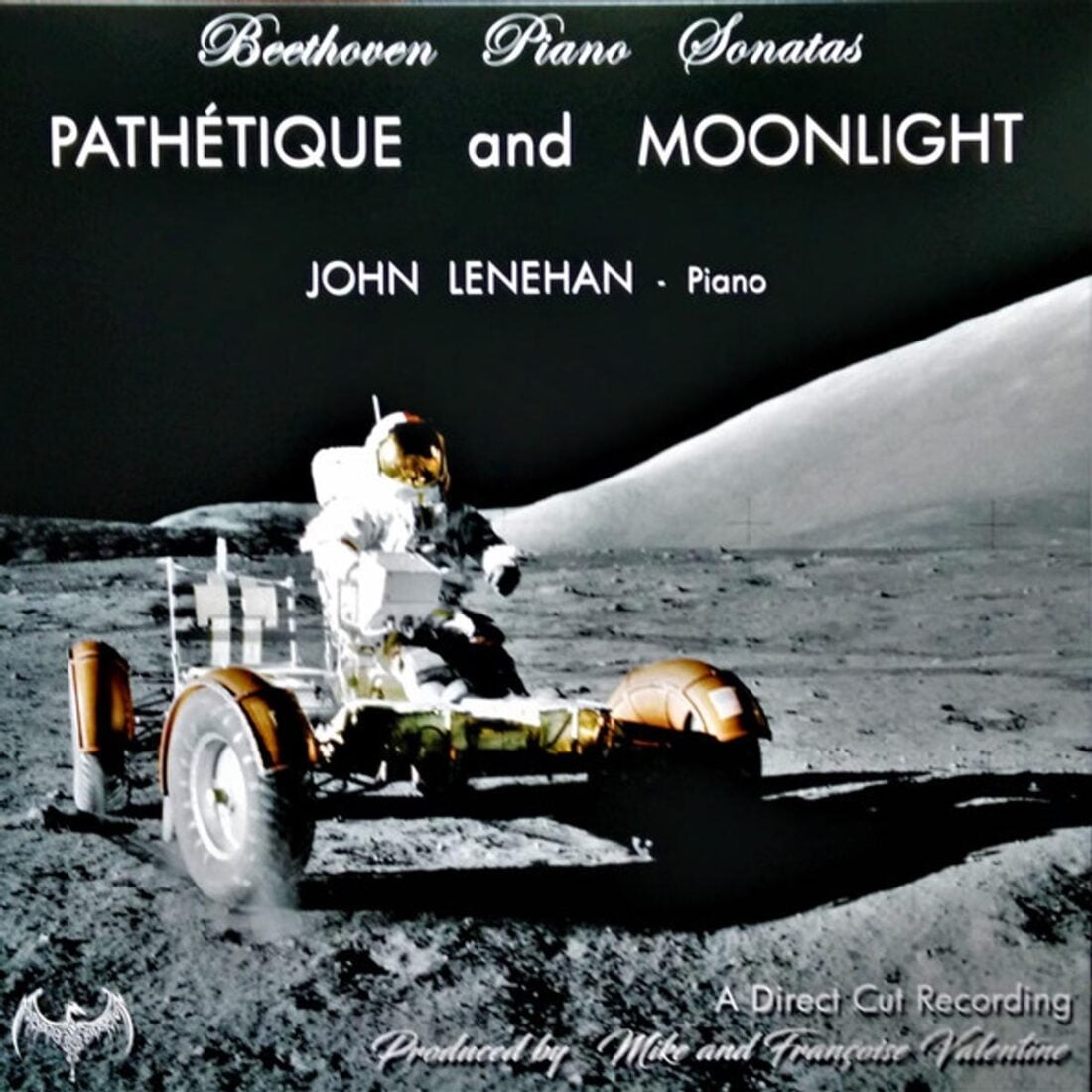
Solo piano leaves little room for recording flaws because every attack, decay, and shift in touch sits in the open.
Beethoven’s Moonlight and Pathétique sonatas demand control, expression, and a wide dynamic range. This direct-to-disc recording preserves the quieter passages without making the louder moments feel restrained.
John Lenehan’s playing has convincing weight in the lower register, while the softer notes linger long enough for the instrument’s character to come through. The performance does not rely on exaggerated room sound to create drama.
Both sonatas were recorded as continuous performances, which helps the phrasing feel unbroken. You hear the tension build through the playing rather than through edits or studio shaping.
19. Joscho Stephan Trio – Paris-Berlin (Berliner Meister Schallplatten, 2018)

Jazz manouche depends on speed, articulation, and touch. This recording captures those qualities without turning the trio into a blur.
Joscho Stephan’s guitar lines move quickly, but the notes stay clean enough to follow through the fastest runs. The rhythm guitar keeps its chop and drive, while the acoustic bass holds the pulse without getting buried.
That separation matters because this style can sound crowded when the recording smears the attack. Here, the trio keeps its momentum while each instrument retains its own texture and role.
The result is energetic without feeling overloaded. It lets the speed impress you, but it also lets you hear the control behind it.
20. Billie Eilish – Live at Third Man Records (Third Man Records, 2019)

Modern pop rarely intersects with direct-to-disc recording, which is what makes this Third Man session stand out.
Recorded live to acetate in Nashville, the performance strips Billie Eilish’s songs down to voice, guitar, and the room around them. There is no dense production to hide behind, so small vocal changes become the focus.
Her delivery stays close and controlled, with breath, phrasing, and slight shifts in volume carrying much of the drama. The guitar sits nearby rather than behind a polished studio layer, giving the session a more exposed feel than her standard album productions.
This record belongs here because it shows direct-to-disc from a different angle. Instead of big-band impact or audiophile jazz precision, it captures how fragile a modern pop performance can feel when the production is pulled back.